
Quick Answer
If a fire sprinkler went off accidentally, first confirm there is no fire. If you have any doubt, leave and call 911. Once you are sure, close the sprinkler control valve at the riser, keep people away from wet electrical equipment, notify the fire department and your alarm company, and call a licensed fire sprinkler contractor.
Why the First Few Minutes Matter
An open sprinkler head does not stop on its own. It keeps flowing until someone closes the valve that feeds it. Expect roughly 25 to 35 gallons per minute from one open commercial head, so a ten minute delay can put 250 to 350 gallons on your floor.
That is still far less than a fire hose stream, but it is plenty to soak ceilings, inventory and the unit below. Most of the damage in an accidental discharge comes from the time it takes someone to find the shutoff. This guide walks through the right order of actions, the common causes in South Florida buildings and what must happen before the system counts as protected again.
What Is an Accidental Fire Sprinkler Discharge?
An accidental fire sprinkler discharge is water released from a sprinkler head or pipe when there is no fire. It usually involves a single head that was hit, overheated or weakened by corrosion. It is different from a false fire alarm, which makes noise but releases no water.
True product failures are extremely rare. Manufacturing defects account for roughly one in 16 million sprinkler openings. Almost every accidental discharge traces back to something that happened to the head after it was installed.
What Should You Do First When a Sprinkler Goes Off?
Confirm there is no fire, then stop the water. Follow these steps in order.
- Check for fire. Look for flame, smoke or a burning smell near the open head. Sprinklers often put out a small fire before anyone notices it. If you are unsure, evacuate and call 911.
- Protect people. Keep everyone out of standing water near outlets, power strips and equipment. Cut power to the affected area only if the electrical panel is dry and safe to reach.
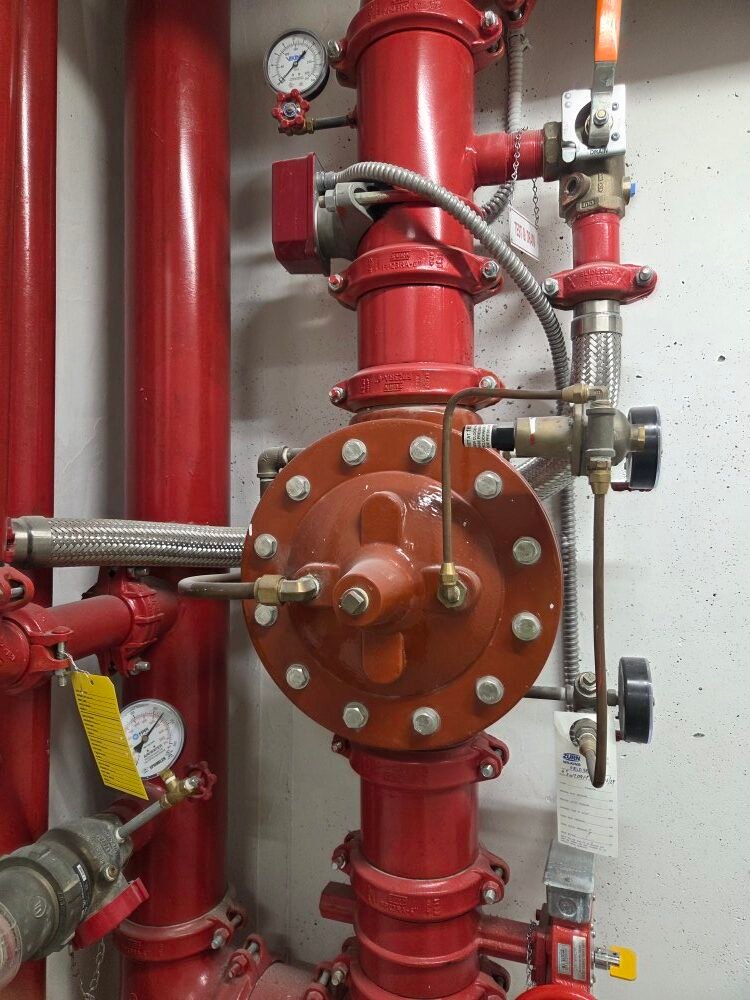
- Close the control valve. Go to the sprinkler riser and close the valve that feeds the affected zone.
- Open the drain. With the control valve closed, opening the main drain at the riser relieves the water left in the pipes so the head stops dripping sooner.
- Make the calls. Tell the fire department and your alarm monitoring company what happened, then call a licensed sprinkler contractor and your insurer.
- Document everything. Photograph the head, the ceiling, the valve position and all damage before cleanup starts.
- Start drying. Move contents, extract water and get air moving.
How Do You Shut Off a Fire Sprinkler?
You shut off a fire sprinkler by closing the system control valve, not by touching the head itself. The valve sits on the riser, usually in a mechanical room, stairwell, garage or outside wall. Turn it fully closed and confirm the flow stops.
| Valve type | How to recognize it | How to close it |
|---|---|---|
| OS&Y gate valve | Large handwheel with a threaded stem sticking out | Turn the wheel clockwise until the stem is fully drawn in |
| Butterfly valve | Small handwheel or crank with an OPEN/SHUT indicator | Turn until the indicator reads SHUT |
| Post indicator valve | Post outside the building with a small window | Turn with the attached wrench until the window reads SHUT |
A few practical points from the field:
- Valves are often chained and locked open. Know where the key is before you ever need it.
- Most valves are electronically supervised, so closing one sends a signal to the monitoring company. That is normal.
- In multi tenant buildings and condos, one valve may control a whole floor or the whole building. Call building management right away instead of hunting for it yourself.
- Sprinkler stopper tools can plug a single open head. They are worth keeping on site, but only if staff have practiced with them.
Why Do Fire Sprinklers Go Off Without a Fire?
Sprinklers respond only to heat or physical damage. Five culprits explain most malfunctions, per a 2012 study published by the American Society of Civil Engineers: overheating, freezing, corrosion, mechanical damage and deliberate sabotage.
Here is how those causes tend to show up in South Florida:
| Cause | Typical local example |
|---|---|
| Mechanical damage | Forklifts in Doral and Medley warehouses, ladders, moving furniture, hangers on sprinkler heads |
| Overheating | Heads near skylights, unconditioned attics, commercial ovens, heaters or hot work |
| Corrosion | Salt air in coastal parking garages and older piping in Monroe and Broward counties |
| Sabotage or tampering | Vandalism in stairwells, garages and vacant units |
| Freezing | Uncommon here, but possible in walk in freezers and cold storage |
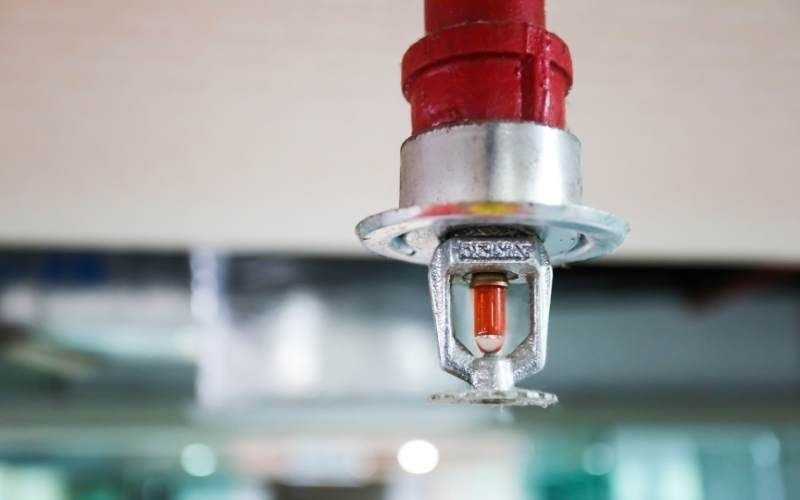
One thing that does not set off a sprinkler is everyday smoke. A head ignores smoke, cooking vapors, or a little steam because none of them carries enough heat to break the glass bulb or melt the link.
Is Sprinkler Water Dirty or Dangerous?
Sprinkler water is not hazardous in most cases, but it is not clean. Water sits in steel pipe for years, so the first surge is often dark, oily and foul smelling from rust and sediment. Treat it as stain causing and wash skin after contact.
The bigger risks are electricity and mold. EPA guidance sets a 24-48 hour window for drying wet areas and items before mold growth becomes likely. In South Florida humidity, treat that as a hard deadline and bring in a water restoration company early.
What Happens After the Valve Is Closed?
Closing the valve stops the damage, but it also leaves the building unprotected. Fire codes call this an impairment. Chapter 15 of NFPA 25 governs it: someone acts as impairment coordinator, the system gets tagged, and the fire department and insurer are notified.
Time matters here. Outages that run past 10 hours in a 24-hour period bring a tougher rule: the local authority must be told, and the building is either evacuated or placed under an approved fire watch until service returns.
Before the system goes back in service, a licensed contractor should:
- Identify why the head opened, not just replace it.
- Install a new head that matches the original type, temperature rating and response.
- Inspect nearby heads and piping for the same problem.
- Reopen the valve, test the system and confirm the alarm signals clear.
- Record the event for your inspection file.
Local fire marshals in Miami, Fort Lauderdale, West Palm Beach and other cities can add their own requirements, so confirm expectations with your jurisdiction.
Common Mistakes to Avoid
- Closing the valve before checking for fire. If the head opened for a real fire, you have just removed the protection.
- Leaving the valve closed for days. A closed valve is a leading reason sprinklers fail in real fires.
- Swapping the head yourself. A wrong temperature rating or head type can fail an inspection and compromise coverage.
- Skipping the cause. If corrosion or heat opened one head, others nearby may be close behind.
- Forgetting the insurer. Late notice can complicate a water damage claim.
How Can You Prevent It From Happening Again?
Prevention comes down to protecting heads and knowing your system.
- Fit head guards where heads sit low or near traffic, such as garages, warehouses and gyms.
- Never hang anything from a sprinkler head or pipe.
- Tell painters, movers and contractors where the heads are before work starts.
- Check that heads near heat sources carry the right temperature rating. Our guide to fire sprinkler bulb colors explains how to read them.
- Label the control valve, post a simple shutoff plan and show at least two staff members where it is.
- Keep the spare head cabinet stocked with the correct heads and wrench.
- Stay current on inspections so corrosion is caught early.
Key Takeaways
- Confirm there is no fire before you shut anything off.
- The control valve at the riser stops the water, not the head.
- One open head can release hundreds of gallons in ten minutes.
- Most accidental discharges come from impact, heat or corrosion, not defects.
- A closed valve means an unprotected building, so restore service fast.
- Dry everything within 24 to 48 hours to limit mold.
- Head replacement and return to service belong with a licensed contractor.
Frequently Asked Questions
Do all fire sprinklers go off at the same time?
No. In standard wet pipe systems each head works on its own and opens only when it is heated or broken. An accidental discharge almost always involves one head. Whole room discharge only happens in special deluge systems, which use open heads and are found in high hazard industrial settings.
Can smoke or burnt food set off a fire sprinkler?
No. Fire sprinklers react to heat, not smoke. Cooking smoke, steam and vaping may trigger a smoke detector and the fire alarm, but they will not open a sprinkler head. A head opens only when the air around it reaches its rated temperature or the head is physically damaged.
How much water comes out of one sprinkler head?
A single commercial head commonly releases around 25 to 35 gallons per minute, depending on pressure and head size. That means roughly 250 to 350 gallons in ten minutes. Residential heads flow less. The total depends almost entirely on how quickly someone closes the control valve.
Can I turn the sprinkler system back on myself?
It is not recommended. The open head must be replaced with an exact match first, and the cause should be identified. Reopening the valve without those steps can restart the flooding or leave a hidden problem in place. A licensed contractor should restore and test the system.
Who pays for water damage from an accidental sprinkler discharge?
It depends on the cause and the policies involved. Commercial property insurance often covers sudden accidental discharge, but responsibility can shift to a tenant, contractor or mover who damaged the head. This is general information, not insurance advice. Report the loss promptly and ask your agent how your policy applies.
Should I call 911 if a sprinkler goes off and there is no fire?
Call 911 if you have any doubt about fire, if anyone is hurt or if water is reaching electrical equipment. If you are certain there is no fire, still notify the fire department, because a water flow alarm has probably already been sent and crews may be on the way.
How long can a sprinkler system stay shut off?
As short a time as possible. Under the NFPA 25 impairment rules, an outage longer than 10 hours in a 24 hour period typically requires notifying the local authority and either evacuating or posting an approved fire watch. Your fire marshal and insurer may set stricter limits.
Conclusion
A sprinkler that goes off with no fire is stressful, but the response is simple when you know it in advance: rule out fire, close the control valve, make the calls, dry the space and get the system back in service properly. The buildings that suffer the least damage are the ones where staff already know where the valve is.
If you manage a property in South Florida and want help locating your control valves, finding out why a head opened or getting a system back in service after a discharge, the team at McNair Fire Protection is glad to help. Call (786) 614 1034 or reach out through the contact page.
Services
Ready to Make a Difference? Join Our Mission Today!
Nulla pul vinar euismod nisl, sed mattis em orci dapibus porta suspen.
Still Need Assistance?
Nunc viverra erat tincidunt elit auctor sed fermen tum. Donec quis tellus quis semdal ronci fermen tum.
(786) 614-1034
info@mcnairfire.co